

























































































































































4-Week Diet Plan for Weight Loss: A Sustainable 4-Week Guide
Author: RVLNSV PRASAD
Updated: August 2026
[About Us]
[Author Bio]
[Editorial Policy]
[Contact Us]
Quick Answer
A 4-week diet plan for weight loss should be more than a temporary list of foods. A better approach uses four weeks to develop sustainable habits around balanced meals, portion awareness, physical activity, sleep, and meal planning. Weight loss varies from person to person, so a four-week plan should not promise a fixed number of kilograms. The National Institute of Diabetes and Digestive and Kidney Diseases explains that successful weight-management programs should include healthy eating, physical activity, behavioral support, realistic goals, and a plan for maintaining weight loss.
The goal of this guide is simple: help you create habits that can continue after the four weeks are finished.
Introduction
A 4-week diet plan for weight loss can provide structure when you are unsure where to begin.
Many people want to lose weight quickly. They search for strict meal plans, dramatic transformations, and diets that promise major results within a few weeks.
But a short-term diet is not automatically a long-term solution.
A better approach is to use four weeks as a starting point for improving everyday eating habits.
Instead of asking, “How much weight can I lose in four weeks?” ask a more useful question:
“What healthy habits can I build in four weeks that I can continue afterward?”
That change in perspective matters.
Weight management is influenced by food intake, physical activity, sleep, stress, medications, health conditions, genetics, environment, and other factors. NIDDK recommends realistic goals and weight-management approaches that are tailored to a person’s health, preferences, cultural needs, and ability to maintain the changes over time. NIDDK’s guidance on choosing a safe and successful weight-loss program explains why sustainable lifestyle changes are more appropriate than quick-fix promises.
This guide therefore does not promise a specific amount of weight loss.
Instead, it provides a practical four-week framework for building healthy eating habits.
What Can You Realistically Expect in Four Weeks?
Four weeks is long enough to practice new habits, but it is not long enough to predict exactly how much weight every person will lose.
Your progress may be influenced by:
- Starting body weight
- Food intake
- Physical activity
- Sleep
- Stress
- Medications
- Medical conditions
- Genetics
- Daily routine
- How consistently you follow your plan
The scale is only one way to assess progress.
During four weeks, you may also notice that:
- Meal planning becomes easier.
- You become more aware of portions.
- You eat fewer highly processed foods.
- You move more regularly.
- Your routine becomes more consistent.
- You become more confident preparing meals.
- You understand your eating triggers better.
For people who need to lose weight, even a modest reduction can have meaningful health benefits. The National Heart, Lung, and Blood Institute notes that losing 5% to 10% of starting body weight can significantly improve health and quality of life.
That does not mean everyone should aim for the same percentage or achieve it within four weeks.
The important point is that four weeks should be viewed as a beginning, not a deadline.
Four-Week Action Plan Table
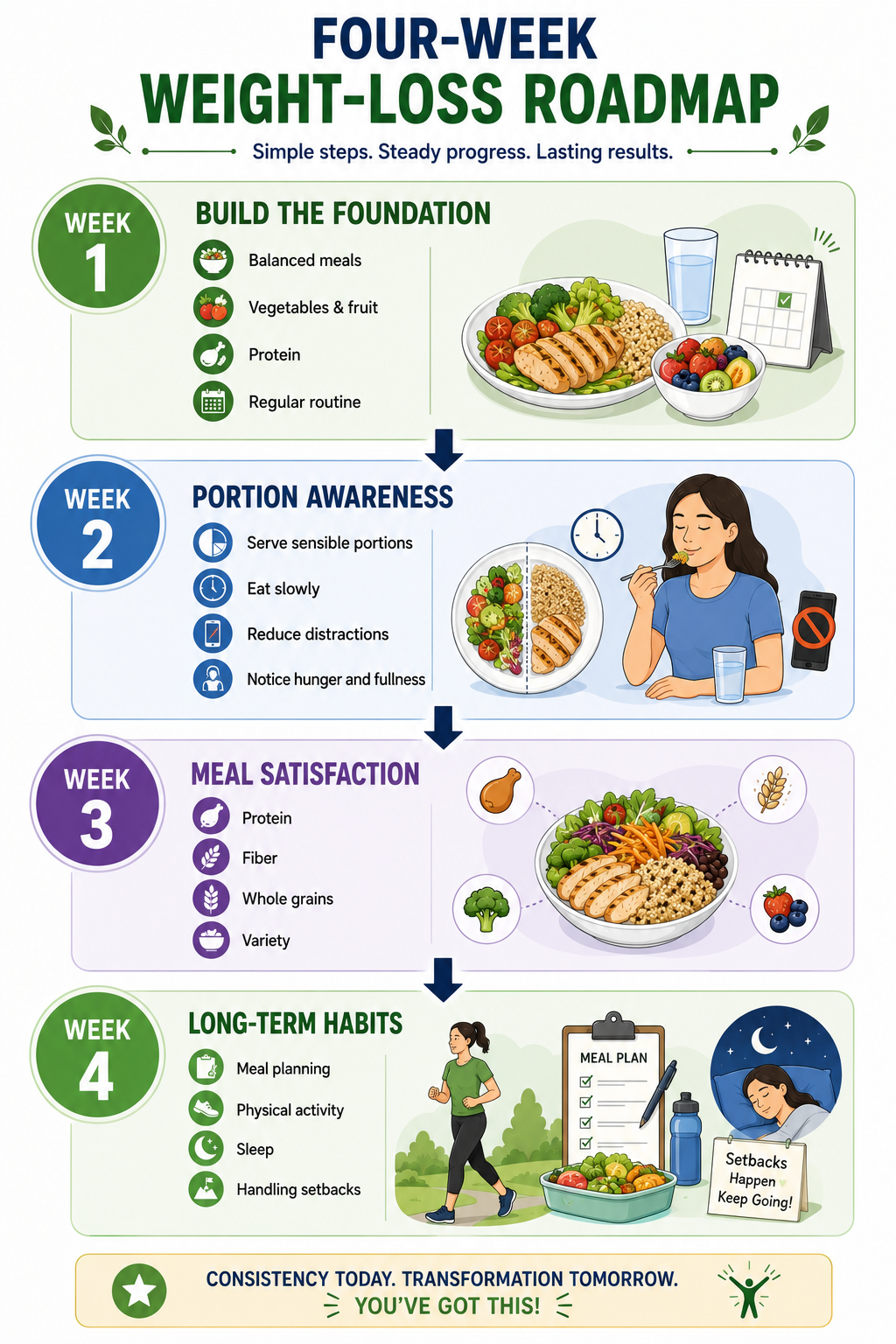
| Week 1 | Build the foundation. | Balanced meals, vegetables, protein | Short regular walks | Establish a routine. |
| Week 2 | Improve portion awareness. | Sensible portions, slower eating | Gradually increase movement. | Eat with fewer distractions. |
| Week 3 | Improve meal satisfaction. | Protein, fiber, whole foods | Add suitable strength work. | Build satisfying meals |
| Week 4 | Prepare for long-term success. | Meal planning and flexibility | Maintain regular activity | Create a maintenance routine |
Week 1: Build a Balanced Eating Routine
The first week is about creating structure.
You do not need to remove every food you enjoy.
You also do not need a “detox.”
Instead, focus on building meals around a variety of nutritious foods.
The World Health Organization’s current healthy-diet guidance emphasizes four broad principles: adequacy, balance, moderation, and diversity. It also explains that the exact composition of a healthy diet varies according to individual characteristics, cultural context, locally available foods, and dietary customs.
Your Week 1 Priorities
- Eat regular meals that fit your routine.
- Include vegetables and fruit.
- Choose appropriate protein sources.
- Include whole grains or other nutritious carbohydrate sources.
- Reduce sugary drinks.
- Drink fluids according to your individual needs.
- Reduce unnecessary highly processed snack foods.
- Begin gentle, regular physical activity.
A Simple Meal Framework
Breakfast
Choose a combination such as
- Oats with fruit and yogurt
- Eggs with whole-grain toast and vegetables
- A vegetable-based breakfast with a suitable protein source
Lunch
Build around:
- Vegetables
- Protein
- Rice, roti, whole grains, potatoes, or another suitable carbohydrate
Snack
If you are hungry between meals, options can include:
- Fruit
- Yogurt
- Nuts
- Roasted chickpeas
- Another nutritious snack that suits your needs
Dinner
Aim for a balanced meal rather than simply trying to eat as little as possible.
The NIDDK recommends meals built around vegetables, fruits, protein foods, and whole grains, while also noting that healthy eating does not have to be expensive or complicated.
Week 1 Goal
Do not chase perfection.
Your goal is to make your normal eating pattern more organized and nutritious.
Week 2: Learn Portion Awareness
Week 2 focuses on a skill that can be more useful than memorizing a list of “good” and “bad” foods.
That skill is portion awareness.
Even nutritious foods can contribute more calories than intended when portions become very large.
At the same time, you do not need to weigh every ingredient or count every calorie to eat more mindfully.
Try These Simple Strategies
- Serve food onto a plate instead of eating directly from a package.
- Use a plate or bowl that makes portions easy to see.
- Eat sitting down when possible.
- Slow down during meals.
- Avoid eating while watching television.
- Pause before automatically taking another serving.
- Pay attention to hunger and fullness.
NIDDK provides practical advice on portion awareness, reading food labels, eating healthier meals, and reducing distractions while eating. Its guidance for adults also emphasizes practical strategies that can be used in everyday life.
The Balanced Plate Idea
A simple plate can include:
- About half: vegetables and other nutrient-rich plant foods
- About one quarter: a protein source
- About one quarter: grains, potatoes, rice, roti, or another carbohydrate source
This is a flexible framework, not a rigid prescription.
Your nutritional needs may differ depending on your age, activity level, health status, culture, and personal preferences.
Week 2 Goal
Instead of asking:
“Is this food allowed?”
Ask:
“What portion and combination makes sense for this meal?”
That shift can make healthy eating easier to maintain.
Portion Guide: “What Does a Sensible Portion Look Like?
| Food Group | Practical Portion Approach | Examples |
|---|
| Vegetables | Make them a substantial part of the meal. | Spinach, carrots, broccoli, beans |
| Protein | Include a suitable serving with meals | Eggs, fish, chicken, dal, tofu |
| Carbohydrates | Choose an amount appropriate for your needs. | Rice, roti, oats, potatoes |
| Fruit | Include as part of a varied diet | Apple, banana, orange, berries |
| Healthy fats | Use moderate amounts. | Nuts, seeds, avocado, oils |
| Snacks | Base them on hunger and individual needs | Fruit, yogurt, nuts |
Important: There is no single portion size that is right for every person. Energy and nutrient needs vary according to factors such as age, body size, sex, metabolism, and physical activity.
Week 3: Improve Meal Satisfaction
A weight-loss eating plan should not leave you thinking about food all day.
Week 3 focuses on building meals that are satisfying and nutritionally balanced.
Protein-rich foods can be included alongside vegetables, fruits, whole grains, legumes, and other nutritious foods.
Useful Protein Choices
Depending on your preferences:
- Eggs
- Fish
- Chicken
- Yogurt
- Milk
- Lentils
- Beans
- Chickpeas
- Tofu
- Other suitable protein-rich foods
High-Fiber Choices
You can also include:
- Vegetables
- Fruits
- Oats
- Whole grains
- Beans
- Lentils
- Chickpeas
- Nuts and seeds
The NIDDK’s guidance on eating and physical activity for weight management recommends a healthy eating pattern that includes vegetables, whole fruits, whole grains, and protein foods such as seafood, lean meats, eggs, beans, lentils, nuts, seeds, and soy products.
The WHO also emphasizes variety, balance, moderation, and diversity as foundations of a healthy diet.
The purpose is not to find one food that “burns fat.”
There is no magic ingredient that makes a four-week plan work.
The more useful approach is to create meals that provide adequate nutrition and fit your preferences.
Week 3 Challenge
Before preparing a meal, ask:
- Where is the protein?
- Where are the vegetables or fruit?
- What carbohydrate source fits this meal?
- Will this meal actually satisfy me?
These questions can turn a diet plan into a repeatable eating pattern.
Week 4: Turn the Plan Into a Lifestyle
The fourth week is different.
You are no longer simply following a temporary schedule.
You are deciding which habits deserve to stay.
Focus on:
- Meal planning
- Grocery shopping
- Eating out
- Managing weekends
- Handling cravings
- Physical activity
- Sleep
- Stress
- Preparing for setbacks
NIDDK recommends that successful weight-loss programs include a plan for maintaining weight loss, because continuing healthy lifestyle habits is an important part of long-term success. See NIDDK’s guidance on maintaining weight loss.
Week 4 Questions
Ask yourself:
- Which meals were easiest to maintain?
- Which foods kept me satisfied?
- When did I usually overeat?
- What caused me to abandon my routine?
- Which form of exercise did I actually enjoy?
- What can I continue next month?
These questions are more valuable than simply asking whether you reached a particular number on the scale.
What to Eat During a 4-Week Weight Loss Plan
There is no single menu that is appropriate for everyone.
Instead of creating an extremely restrictive daily chart, use a flexible meal-building system.
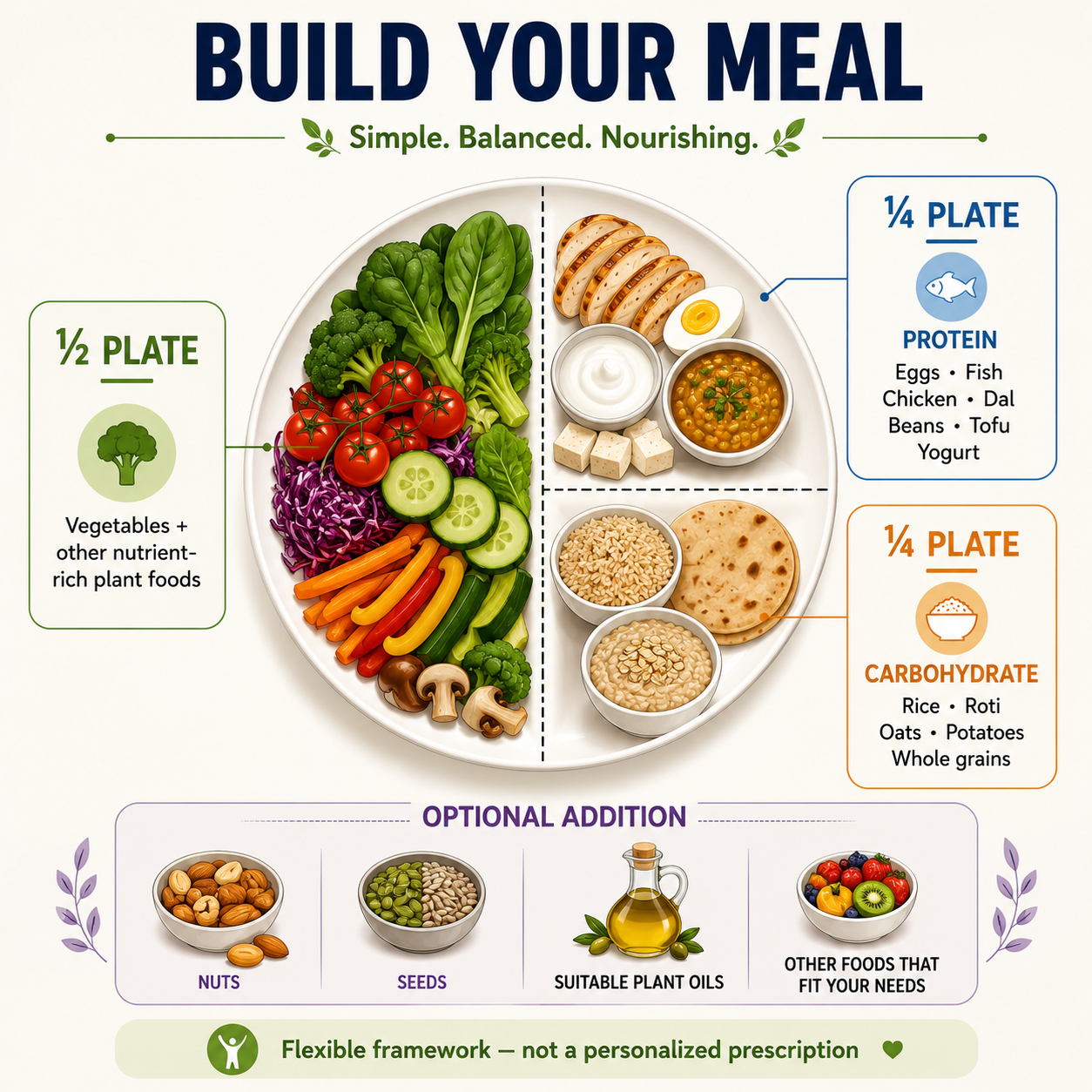
| Meal Component | What to Include | Examples | Why It Helps |
|---|---|---|---|
| Protein | A suitable protein source | Dal, eggs, fish, chicken, tofu, beans | Helps make meals more satisfying |
| Vegetables | Variety of vegetables | Spinach, carrots, broccoli, cucumber | Adds fiber and nutrients |
| Fruit | Whole fruit | Apple, orange, banana, seasonal fruit | Provides nutrients and fiber |
| Carbohydrate | Appropriate portion | Rice, roti, oats, potatoes, whole grains | Provides energy |
| Healthy fat | Moderate amount when appropriate | Nuts, seeds, suitable oils | Adds flavor and nutrients |
| Drink | Water or another suitable beverage | Water, unsweetened options | Helps avoid unnecessary sugary drinks
|
| Meal | Include | Examples |
|---|---|---|
| Breakfast | Protein + high-fiber food + fruit/vegetable | Eggs + whole-grain toast + fruit |
| Lunch | Vegetables + protein + carbohydrate | Dal + vegetables + rice or roti |
| Snack | Nutritious food if hungry | Fruit + yogurt |
| Dinner | Protein + vegetables + suitable carbohydrate | Fish/tofu + vegetables + rice |
| Optional snack | Based on hunger and needs | Nuts, fruit, yogurt |
So there is no reason to remove culturally familiar foods simply because they contain carbohydrates.
Rice, roti, potatoes, oats, and other carbohydrate foods can fit into a balanced eating pattern.
The key is the overall pattern, quantity, preparation, and balance.
How to Adapt the Plan to Indian Meals
A healthy weight-loss plan does not need to look like a Western diet chart.
Indian meals can be adapted using familiar foods.
Protein Options
- Dal
- Rajma
- Chana
- Chickpeas
- Curd
- paneer in appropriate portions
- Eggs
- Fish
- Chicken
- Tofu
Vegetable Options
- Spinach
- Carrots
- Cucumber
- Beans
- Cauliflower
- Tomato
- Gourds
- Mixed vegetables
Carbohydrate Options
- Rice
- Roti
- Oats
- Whole grains
- Potatoes
- Other traditional staples
Practical Principle
Instead of completely eliminating rice or roti, consider how much you serve and what you eat alongside them.
A meal containing vegetables, protein, and a suitable carbohydrate source can be more satisfying than simply removing one food group.
The WHO’s India guidance on healthy diets recognizes that healthy dietary patterns should take local foods, cultural practices, and individual circumstances into account.
A Simple Grocery List
A practical shopping list can make healthy eating easier.
Protein
- Eggs
- Fish
- Chicken
- Lentils
- Beans
- Chickpeas
- Tofu
- Yogurt
Vegetables
- Spinach
- Carrots
- Cucumber
- Tomatoes
- Broccoli
- Cauliflower
- Seasonal vegetables
Fruits
Choose a variety of seasonal options that fit your preferences.
High-Fiber Staples
- Oats
- Whole grains
- Rice
- Beans
- Lentils
Healthy Fat Sources
- Nuts
- Seeds
- Avocado where available
- Suitable plant oils
You do not need expensive “diet foods.”
A sustainable plan should work with foods you can afford, find easily, and enjoy.
Physical Activity During the Four Weeks
Food is important, but physical activity is valuable for more than weight loss.
Regular movement supports cardiovascular health, physical function, mental well-being, and overall health.
NIDDK also explains that physical activity has important health benefits independent of weight loss and may help people maintain weight they have lost. NIDDK’s physical-activity guidance also notes that inactive people can build toward activity goals gradually.
Beginner Progression
Week 1
10–20 minute walks on several days.
Week 2
Gradually increase walking time if comfortable.
Week 3
Add simple strength exercises appropriate for your ability.
Week 4
Build a weekly routine that you can realistically maintain.
You do not need to punish yourself with exercise because you ate more than planned.
Movement should support your health, not become a form of compensation.
What If You Feel Hungry?
Hunger is not a sign that your diet is failing.
It is information.
If you are consistently very hungry, examine your meals.
Ask:
- Did I eat enough at the previous meal?
- Did I include a protein source?
- Did I include high-fiber foods?
- Am I drinking enough fluids?
- Did I sleep adequately?
- Am I trying to restrict too aggressively?
A good plan should be sustainable.
If you are constantly hungry, exhausted, or preoccupied with food, the approach may need adjustment.
What If You Crave Certain Foods?
Cravings are normal.
You do not necessarily need to ban your favorite foods.
A highly restrictive approach can make a plan harder to follow.
Instead, consider:
- Eating balanced meals regularly.
- Keeping tempting foods in reasonable portions.
- Eating favorite foods mindfully.
- Avoiding the “I ruined my diet” mentality.
- Returning to your normal routine after an indulgent meal.
Healthy eating is not destroyed by one dessert.
The overall pattern matters more.
How to Handle Weekends and Social Events
A common problem is being highly restrictive Monday through Friday and then abandoning the plan on Saturday and Sunday.
Instead, make your plan flexible.
Before an Event
Do not starve yourself to “save calories.”
At the Event
Look at the available choices before filling your plate.
During the Meal
Eat slowly and enjoy the food.
Afterward
Do not compensate by skipping meals the next day.
Return to your normal routine.
NIDDK recommends setting realistic goals, addressing barriers, and developing strategies for dealing with setbacks as part of successful weight-management programs. Its guidance on healthy eating and physical activity provides practical advice for handling everyday barriers.
How to Stay on Track When Eating Out
| Situation | Practical Choice | Better Approach |
|---|---|---|
| Large restaurant portion | Share or save a part for later. | Don’t feel required to finish everything |
| Fried main course | Look for grilled/baked options. | Choose based on preference and overall meal. |
| Large sugary drink | Choose a smaller serving or water. | Reduce liquid calories. |
| Buffet | Scan options first. | Choose what you actually want. |
| Heavy sauce | Ask for sauce separately when possible. | Control how much you use. |
| Dessert | Share or choose a smaller portion | Enjoy it without feeling guilty. |
| Social meal | Eat normally beforehand. | Don’t starve yourself to compensate |
The Minimum Healthy Day
Some days will not go according to plan.
- You may have a busy workday.
- You may travel.
- You may feel tired.
- You may have a family commitment.
- Instead of thinking:
“I cannot follow the plan today.”
Create a minimum healthy day.
That might mean:
- Eat one balanced meal.
- Include some vegetables or fruit.
- Drink fluids according to your needs.
- Take a short walk.
- Avoid unnecessary mindless snacking.
- Get back to your normal sleep routine.
This is not a medical protocol.
It is a practical framework created for this article to prevent one difficult day from becoming an abandoned plan.
How to Handle a Bad Day Without Starting Over
Suppose you eat more than planned.
What should you do?
- Do not starve yourself the next day.
- Do not exercise as punishment.
- Do not decide that the entire month is ruined.
Instead:
- Recognize what happened.
- Identify the trigger.
- Return to your normal eating pattern.
- Continue your usual physical activity.
- Learn from the experience.
NIDDK notes that successful weight-management programs should help people address barriers and overcome setbacks rather than treating a temporary setback as failure. See its guidance on choosing a successful weight-loss program.
Progress does not require perfection.
| What Happened | Unhelpful Response | Better Next Step |
|---|---|---|
| Ate a large meal | Skip the next mmeal. | Return to your normal eating routine. |
| Ate dessert | Exercise as punishment | Enjoy it and continue normally |
| Missed exercise | Give up for the week. | Resume activity when possible. |
| Weekend overeating | Start a crash diet Monday. | Return to balanced meals. |
| Gained scale weight | Panic | Look at the longer-term trend. |
| Had a stressful day | Blame yourself | Identify the trigger. |
| Missed meal preparation | Order anything available. | Choose the simplest balanced option |
What Should I Change First?
If everything feels overwhelming, start with the area that creates the biggest problem.
| Your Main Challenge | Start With |
| Large portions | Portion awareness |
| Frequent snacking | Meal structure |
| Sugary drinks | Replace some beverages. |
| Little activity | Short daily walks |
| Weekend overeating | Weekend planning |
| Eating from stress | Identify triggers. |
| Poor sleep | Consistent sleep routine |
| Frequent takeout | Simple meal preparation |
| No grocery planning | Weekly shopping list |
| Giving up after setbacks | Build a recovery plan. |
You do not have to change all ten areas at once.
Choose one.
Make it manageable.
Then build from there.
| If You Struggle With… | First Change to Try | Practical Example | What to Avoid |
|---|---|---|---|
| Large portions | Portion awareness | Serve food onto a plate. | Eating directly from packets |
| Frequent snacking | Meal structure | Plan meals and snacks | Grazing all day |
| Sugary drinks | Beverage swap | Choose water more often. | Replacing drinks with extreme restrictions |
| Little activity | Short walks | Start with 10–15 minutes. | Doing intense workouts immediately |
| Weekend overeating | Weekend planning | Plan meals before social events. | Restricting all week |
| Emotional eating | Identify triggers. | Record when and why you eat. | Blaming yourself |
| Poor sleep | Regular sleep routine | Keep a consistent bedtime | Using food to fight tiredness |
| Frequent takeout | Simple meal preparation | Prepare 2–3 easy meals. | Trying to cook complicated recipes every day |
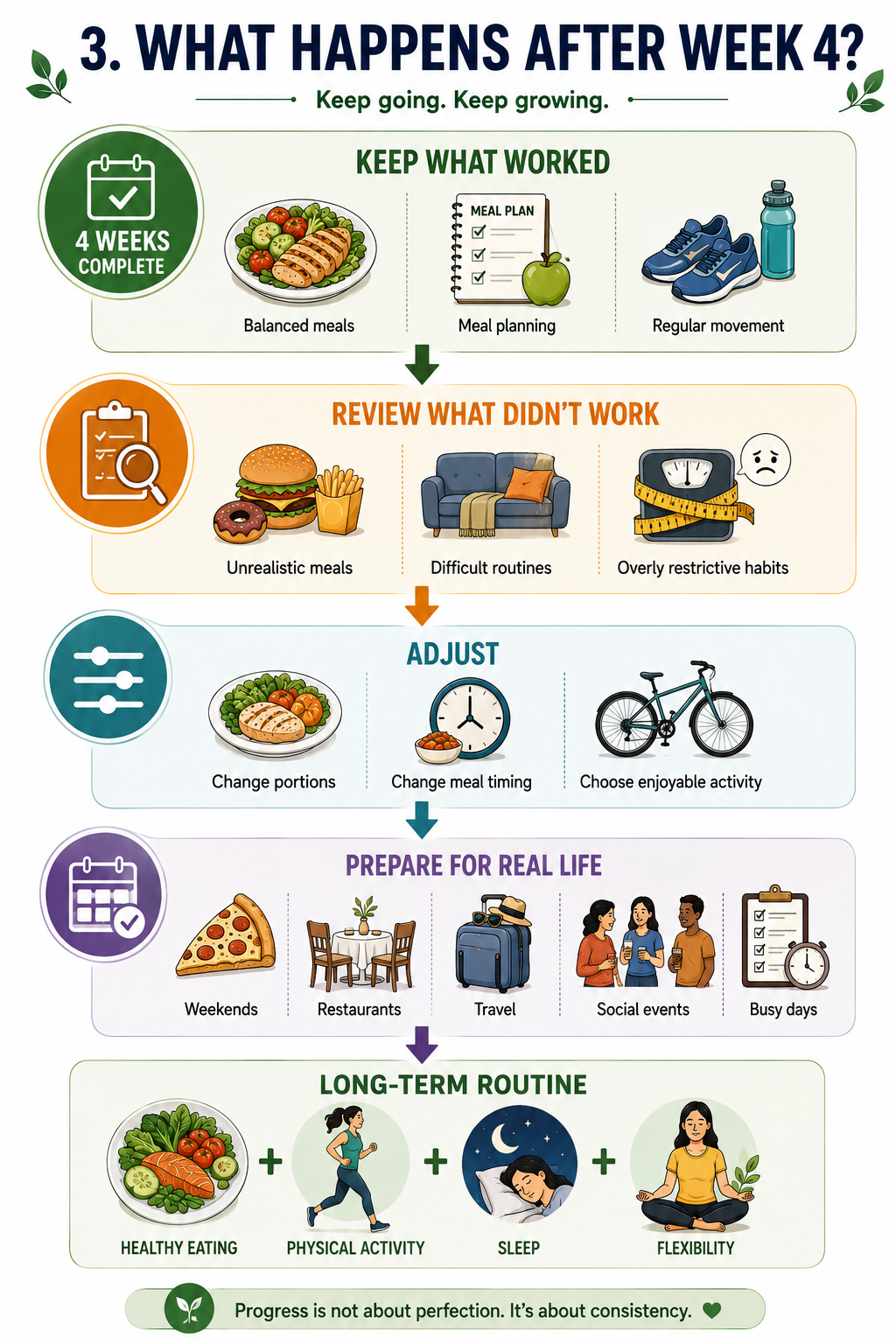
What Happens After the Four Weeks?
This is where many short-term diet plans stop.
They tell you what to do for 28 days and then leave you without a next step.
A better approach is to treat the end of the month as a transition point.
Keep the Habits That Worked
- If preparing breakfast helped, continue it.
- If walking after dinner was enjoyable, keep doing it.
- If weekly grocery planning reduced takeout, continue shopping that way.
Adjust What Did Not Work
- Perhaps the meal schedule was unrealistic.
- Perhaps you tried to exercise too much.
- Perhaps you restricted foods you enjoy.
Change the plan rather than blaming yourself.
Continue Monitoring
You can monitor:
- Eating patterns
- Physical activity
- Sleep
- Body weight if appropriate
- Waist measurement if useful
- Energy
- Fitness
- Overall well-being
NIDDK recommends ongoing healthy lifestyle habits and a maintenance strategy after weight loss. Its guidance on keeping weight off emphasizes continuing healthy behaviors and planning for long-term maintenance.
The real success of a four-week plan is not reaching the end.
It is having a routine you can continue in week five.
Why Extreme Four-Week Diets Can Be a Problem
A plan that promises dramatic results in a few weeks may sound attractive.
But unrealistic promises are a warning sign.
NIDDK specifically advises people to avoid weight-loss programs that promise extremely rapid results, such as losing very large amounts of weight in a very short period, or claim that weight can be lost from a specific body area. NIDDK’s warning signs for weight-loss programs are useful when evaluating online diet claims.
Be especially cautious if a plan:
- Promises a specific large weight loss for everyone
- Requires severe food restriction
- Eliminates numerous food groups without a clear reason
- Requires expensive supplements
- Claims to target fat from one body area
- Promises results without lifestyle changes
- Uses dramatic before-and-after stories as its main evidence
A better plan is one that you can explain, understand, afford, and maintain.
| After Four Weeks | Keep Doing | Adjust If Needed |
|---|
| Meals | Balanced meals | Change meals that are difficult to maintain. |
| Portions | Continue portion awareness. | Reassess portions according to hunger and needs. |
| Activity | Maintain regular movement | Choose activities you enjoy. |
| Shopping | Continue grocery planning. | Simplify the shopping list. |
| Sleep | Maintain a consistent routine. | Address barriers to sleep. |
| Weekends | Keep some structure | Make room for flexibility. |
| Setbacks | Return to your routine | Identify what triggered the setback. |
| Progress | Monitor useful trends. | Avoid obsessing over daily fluctuations |
Common Mistakes to Avoid
1. Trying to Change Everything at Once
Too many changes can make a routine difficult to maintain.
2. Setting an Unrealistic Target
Your body may respond differently from someone else’s.
3. Skipping Meals to Compensate
This can make your eating pattern harder to manage.
4. Treating Foods as Completely Good or Bad
A balanced pattern is usually more sustainable than rigid food rules.
5. Ignoring Weekends
Your routine needs to work outside the weekday schedule.
6. Using Exercise as Punishment
Physical activity should support health rather than compensate for eating.
7. Giving Up After One Setback
One difficult meal does not erase several weeks of effort.
Who Should Talk to a Healthcare Professional Before Starting?
A general online plan is not appropriate for everyone.
Speak with a qualified healthcare professional before making significant dietary or exercise changes if you:
- Have diabetes or another chronic health condition.
- Take medications that may be affected by changes in food intake or body weight.
- Are pregnant or breastfeeding.
- Are under 18.
- Have a history of an eating disorder.
- Have unexplained weight loss or weight gain.
- Have significant nutritional concerns.
- Need medically supervised weight management.
NIDDK recommends discussing safe and effective weight-loss approaches with a healthcare professional and explains that a professional can help tailor a plan to an individual’s health, medications, preferences, and circumstances. Read NIDDK’s guidance on choosing a safe weight-loss program.
A Four-Week Progress Table
| Week | Main Focus | What to Practice |
| Week 1 | Build the foundation. | Balanced meals, vegetables, protein, regular routine |
| Week 2 | Portion awareness | Slower eating, visible portions, fewer distractions |
| Week 3 | Meal satisfaction | Protein, fiber, and varied nutritious foods |
| Week 4 | Long-term habits | Planning, activity, sleep, setbacks, maintenance |
Remember that this is a framework, not a personalized medical prescription
A Simple Daily Checklist
You can use this checklist without turning your entire day into a calorie-counting exercise.
-
I ate balanced meals.
-
paid attention to portions.
-
I drank fluids according to my needs.
-
I moved my body.
-
I limited unnecessary distracted eating.
-
I managed stress in a healthy way.
-
I gave myself enough time for sleep.
-
I avoided punishing myself for setbacks.
-
I included nutritious foods.
The goal is not to check every box every day.
The goal is to notice patterns.
Frequently Asked Questions
1. What is a 4-week diet plan for weight loss for beginners?
A beginner-friendly plan should focus on balanced meals, realistic portions, regular physical activity, adequate sleep, and sustainable habits rather than severe restriction. The best approach is one that fits your health needs, food preferences, culture, budget, and daily routine. NIDDK recommends choosing an evidence-based program that can be followed over the long term. NIDDK’s weight-loss program guidance explains the importance of realistic goals and long-term maintenance.
2. How much weight can I lose in four weeks?
There is no single amount that everyone can safely or realistically lose in four weeks. Weight change depends on individual circumstances. Avoid programs that guarantee a specific large amount of weight loss in a short period. NIDDK specifically identifies rapid-loss promises as a warning sign when evaluating weight-loss programs.
3. Can I follow a four-week plan without exercising?
You can improve your eating habits without formal exercise, but physical activity has important health benefits beyond weight loss. If you are inactive, start gradually and work toward regular activity appropriate for your ability. NIDDK’s physical-activity guidance explains that even shorter periods of activity count and that inactive people can gradually work toward recommended levels.
4. Can vegetarians follow this type of meal plan?
Yes. Vegetarian meals can include protein sources such as lentils, beans, chickpeas, tofu, yogurt, eggs (where appropriate), nuts, and seeds. The overall eating pattern should provide adequate nutrition.
5. Can I eat rice or roti while trying to lose weight?
Yes. Healthy dietary patterns can include staple carbohydrate foods. The WHO explains that healthy diets vary according to culture, locally available foods, and individual circumstances, so rice or roti does not automatically need to be eliminated.
6. What should I do after finishing four weeks?
Continue the habits that worked rather than immediately returning to your previous routine. Maintain appropriate physical activity, meal planning, sleep, and other healthy behaviors. NIDDK emphasizes having a plan for maintaining weight loss and continuing healthy lifestyle habits.
7. Is a four-week weight-loss plan safe for everyone?
No single online plan is appropriate for everyone. People with medical conditions, those taking certain medications, pregnant or breastfeeding people, adolescents, and people with a history of eating disorders may need individualized guidance from a qualified healthcare professional.
Key Takeaways
- Use four weeks to build habits, not chase a guaranteed number on the scale.
- Choose a varied, balanced eating pattern.
- Pay attention to portions without becoming obsessed with measurements.
- Include appropriate protein and high-fiber foods.
- Keep familiar foods such as rice and roti when they fit your overall eating pattern.
- Build physical activity gradually.
- Plan for weekends, restaurants, travel, and social occasions.
- Expect setbacks and learn from them.
- Focus on what you can continue after the four weeks.
- Seek professional guidance when your health circumstances require individualized care.
Author Note
Author: RVLNSV PRASAD
This article was written to provide practical, easy-to-understand information about creating healthier eating and activity habits over four weeks. The recommendations are informed by public health and medical guidance from organizations including NIDDK, NIH, WHO, and NHLBI.
Personal examples and practical suggestions are intended to make the information easier to understand. Personal experiences should not be interpreted as scientific evidence or as a guarantee of individual weight-loss results.
Medical Disclaimer
This article is provided for general educational purposes and is not a substitute for individualized medical, nutritional, or exercise advice.
Weight-management needs differ between individuals. Medical conditions, medications, age, pregnancy, eating disorders, nutritional requirements, and other factors can affect the appropriate approach.
Speak with a qualified healthcare professional before making significant changes to your diet or physical activity, particularly if you have an existing health condition or specific medical concerns.
Sources
- National Institute of Diabetes and Digestive and Kidney Diseases — Choosing a Safe & Successful Weight-Loss Program
Guidance on realistic goals, healthy eating, physical activity, behavioral support, and maintaining weight loss.
NIDDK: Choosing a Safe & Successful Weight-Loss Program - NIDDK — Keep Active & Eat Healthy to Improve Well-being & Feel Great
Practical information about healthy eating, physical activity, barriers, and maintaining a healthy weight.
NIDDK: Keep Active & Eat Healthy - NIDDK — Eating & Physical Activity to Lose or Maintain Weight
Evidence-based guidance on eating patterns, physical activity, and maintaining weight.
NIDDK: Eating & Physical Activity - World Health Organization — Healthy Diet
Current guidance on dietary diversity, balance, moderation, adequacy, and healthy food patterns.
WHO: Healthy Diet - World Health Organization — Physical Activity
Current recommendations and evidence on physical activity and health.
WHO: Physical Activity - WHO India — Healthy Diet
Information relevant to healthy dietary patterns in the Indian context.
WHO India: Healthy Diet - National Heart, Lung, and Blood Institute—Higher Weight and Obesity Treatment
Information on lifestyle changes, weight management, and health benefits associated with appropriate weight loss.
NHLBI: Higher Weight and Obesity Treatment
Conclusion
A 4-week diet plan for weight loss works best when you use it as a starting point for sustainable habits rather than a race to lose a specific amount of weight. Balanced meals, sensible portions, regular movement, adequate sleep, meal planning, and realistic expectations can create a foundation that continues beyond the first month.
The four weeks are only the beginning. Keep the habits that fit your life, adjust the ones that do not, and expect occasional setbacks. Sustainable weight management is built through repeated choices over time—not through one perfect month.
Best 8 Weight Loss Exercises
Apple Cider Vinegar for Weight Loss Fast
- Depression and Weight Loss Treatment: Natural Remedies, Therapies, and Lifestyle Tips
- Are You Struggling to Lose More Weight?
- Blog











[…] 4 Week Diet Plan for Weight Loss […]
[…] 4 Week Diet Plan for Weight Loss […]
[…] 4 Week Diet Plan for Weight Loss […]
[…] 4 Week Diet Plan for Weight Loss […]